By Musanjufu Benjamin Kavubu
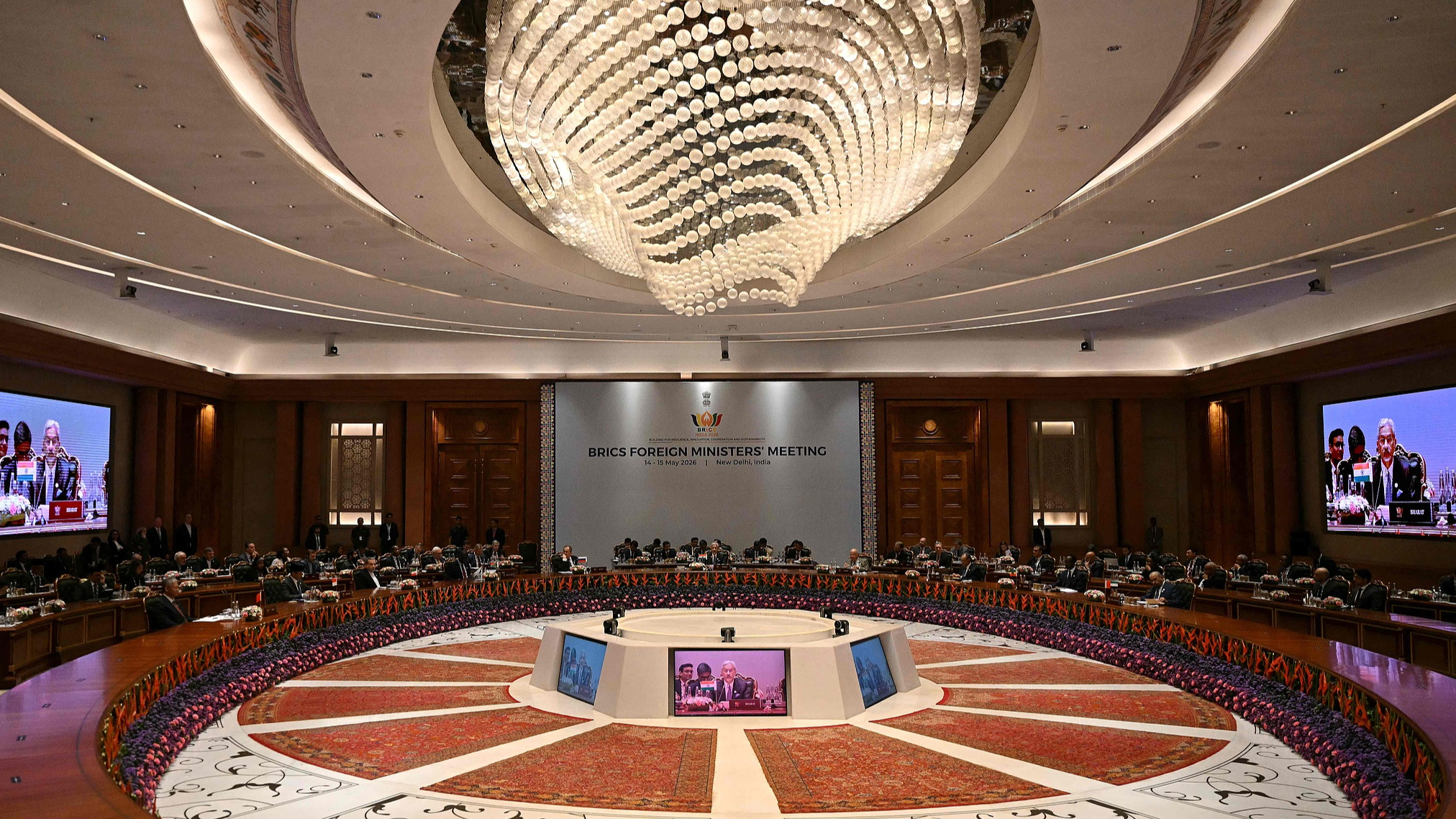
As the rest of the world watched closely what was happening in Beijing, on May 14th and 15th, 2026, the annual BRICS Foreign Ministers meeting took place in New Delhi, India. This meeting is held to set the agenda for the annual BRICS Summit. In 2025, it occurred in Brazil, and in 2026, India will host the 18th Heads of State Summit in September. The theme for the BRICS Foreign Ministers meeting was “Building for a Resilient, Innovation, Cooperation and Sustainability” with a special focus on people-centric and holistic healthcare, with an emphasis on collaboration on health challenges, including communicable and non-communicable diseases. The themes will also be the center stage for the BRICS Summit later in the Year.
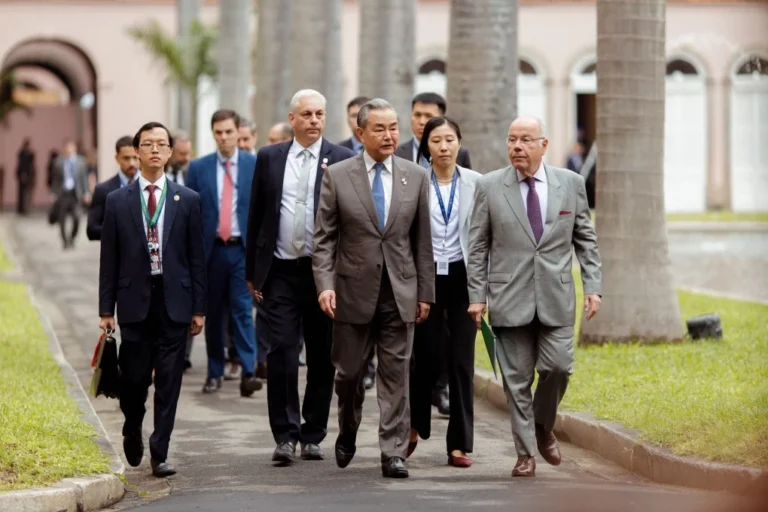
The 2026 BRICS Foreign Ministers meeting also covered global governance reform, economic cooperation and regional security issues including the Iran conflict, which specifically became the highlight of the issues discussed by the 10 member states and the Partner states which included Uganda that was represented by Hon. Gen. Odongo Jeje Abubakhar the Minister of Foreign Affairs. The meeting was chaired by Indian’s foreign Minister Dr. Subrahmanyam Jaishankar, most notably Wang Yi of China was not present as he was attending to the visiting United States delegation in Beijing, the Chinese ambassador in India Xu Feihong took his place, Russia was represented by Sergey Lavrov, South Africa by Ronald Lamola, Brazil by Mauro Viera, Indonesia by Sugiono, Iran was represented by Seyed Abbasi Aragchi, Egypt and Ethiopia also sent their foreign Ministers, while the UAE sent a state minister Khalifa bin Shaheen Al Marar.
We should do well to remember that BRICS is a grouping of major emerging economies seeking to coordinate security and economic policies in the bid to amplify the demands of the Global South or Global Majority has they have come to be known of late. The make of BRICS is the reason the group moved from Brazil, Russia, India China and South Africa in 2023 to add Egypt, Ethiopia, Iran and UAE and in 2025 Indonesia as full member states to have a greater representation of the global South, then there are more than 30 partner states that include Uganda in the process of becoming full members.
As of 2026 BRICS has a population strength of about 49% of the entire world, a geographic cover of 36%, about 40% of the global GDP which is bigger than that of the G7, 23% of the global international trade and a growing alternative financial system in the bloc’s New Development Bank (NDB) that is covering about 100 projects across the globe. The data denotes that BRICS is no longer a mood against Western hegemony but a reality in formation as a multipolar world order unfolds before our eyes, an order that is taking global South advocacy seriously, influencing crisis resolution and a formidable voice on energy and resource control.
The bloc is not a happily ever after fairly take for the global South, what has made BRICS special from the early 2010s is the groupings ability to accommodate a complex blend of members that are also Rivals, even the intricate expansion of the group is not romanticised like the formation of the Bretton Woods institutions and the Post 1945 world order. It’s this basis that has seen China and Indian coexist in the group, and it’s also the reality that has seen BRICS members once in a while have oil tankers Transit a closed strait of Hormuz. But nothing has tested the BRICS as the illegal US-Israel attacks on Iran.
India the host of the BRICS Summit 2026, and all subsequent working group meetings including the just concluded foreign Ministers meeting is very much an ally of Israel, as Iran was being attacked the Indian Prime Minister was on a state visit in Tel Aviv, but that does not stop Abbas Aragchi from taking part in the BRICS annual programs in India. Nonetheless the BRICS Foreign Ministers meeting turned out to be a diplomatic quagmire as Iran and UAE accused each other of aggression. Iran claims it attacked UAE because the USA used the country as a base to stage its attacks in a war that has now closed the 70 day mark. Israel has leaked information that UAE provide more than just a platform for the attacks, with sources saying UAE was directly involved in attacking Iran at the height of the war.
The BRICS Foreign Ministers meeting Chairman’s Statement and outcome document highlighted a commitment to strengthening strategic partnership across political, security economic and financial pillars, but as they prepare for the BRICS Summit, the statement also noted that there were differing views among some members on the Iran conflict, of course it didn’t mention that there was a war of words between Iran and UAE that was televised across the globe, the statement also lists a set of principles that are needed for dialogue and diplomacy, respect for sovereignty, protection of civilian lives and unimpeded maritime flows especially regarding the Strait of Hormuz and the raising fuel prices that are evident even here in Uganda. For BRICS consensus is very unrealistic at a time when it requires for each country and bloc to walk a diplomatic tightrope.