BRICS Foreign Ministers Meeting 2026 Reveals Limits of Global South Consensus

By Musanjufu Benjamin Kavubu

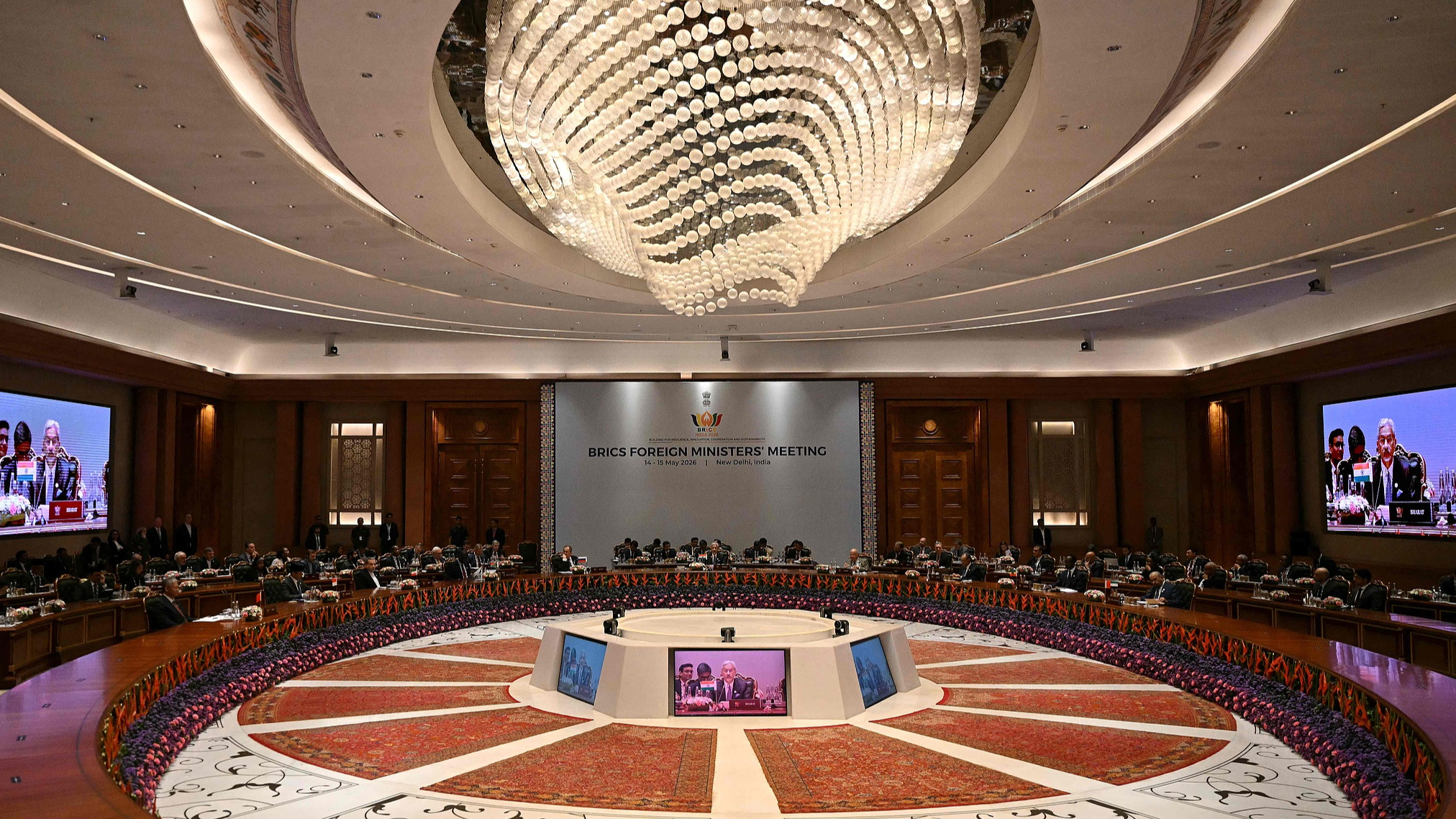
As the rest of the world watched closely what was happening in Beijing, on May 14th and 15th, 2026, the annual BRICS Foreign Ministers meeting took place in New Delhi, India. This meeting is held to set the agenda for the annual BRICS Summit. In 2025, it occurred in Brazil, and in 2026, India will host the 18th Heads of State Summit in September. The theme for the BRICS Foreign Ministers meeting was “Building for a Resilient, Innovation, Cooperation and Sustainability” with a special focus on people-centric and holistic healthcare, with an emphasis on collaboration on health challenges, including communicable and non-communicable diseases. The themes will also be the center stage for the BRICS Summit later in the Year.

The 2026 BRICS Foreign Ministers meeting also covered global governance reform, economic cooperation and regional security issues including the Iran conflict, which specifically became the highlight of the issues discussed by the 10 member states and the Partner states which included Uganda that was represented by Hon. Gen. Odongo Jeje Abubakhar the Minister of Foreign Affairs. The meeting was chaired by Indian’s foreign Minister Dr. Subrahmanyam Jaishankar, most notably Wang Yi of China was not present as he was attending to the visiting United States delegation in Beijing, the Chinese ambassador in India Xu Feihong took his place, Russia was represented by Sergey Lavrov, South Africa by Ronald Lamola, Brazil by Mauro Viera, Indonesia by Sugiono, Iran was represented by Seyed Abbasi Aragchi, Egypt and Ethiopia also sent their foreign Ministers, while the UAE sent a state minister Khalifa bin Shaheen Al Marar.

We should do well to remember that BRICS is a grouping of major emerging economies seeking to coordinate security and economic policies in the bid to amplify the demands of the Global South or Global Majority has they have come to be known of late. The make of BRICS is the reason the group moved from Brazil, Russia, India China and South Africa in 2023 to add Egypt, Ethiopia, Iran and UAE and in 2025 Indonesia as full member states to have a greater representation of the global South, then there are more than 30 partner states that include Uganda in the process of becoming full members.

As of 2026 BRICS has a population strength of about 49% of the entire world, a geographic cover of 36%, about 40% of the global GDP which is bigger than that of the G7, 23% of the global international trade and a growing alternative financial system in the bloc’s New Development Bank (NDB) that is covering about 100 projects across the globe. The data denotes that BRICS is no longer a mood against Western hegemony but a reality in formation as a multipolar world order unfolds before our eyes, an order that is taking global South advocacy seriously, influencing crisis resolution and a formidable voice on energy and resource control.

The bloc is not a happily ever after fairly take for the global South, what has made BRICS special from the early 2010s is the groupings ability to accommodate a complex blend of members that are also Rivals, even the intricate expansion of the group is not romanticised like the formation of the Bretton Woods institutions and the Post 1945 world order. It’s this basis that has seen China and Indian coexist in the group, and it’s also the reality that has seen BRICS members once in a while have oil tankers Transit a closed strait of Hormuz. But nothing has tested the BRICS as the illegal US-Israel attacks on Iran.

India the host of the BRICS Summit 2026, and all subsequent working group meetings including the just concluded foreign Ministers meeting is very much an ally of Israel, as Iran was being attacked the Indian Prime Minister was on a state visit in Tel Aviv, but that does not stop Abbas Aragchi from taking part in the BRICS annual programs in India. Nonetheless the BRICS Foreign Ministers meeting turned out to be a diplomatic quagmire as Iran and UAE accused each other of aggression. Iran claims it attacked UAE because the USA used the country as a base to stage its attacks in a war that has now closed the 70 day mark. Israel has leaked information that UAE provide more than just a platform for the attacks, with sources saying UAE was directly involved in attacking Iran at the height of the war.

The BRICS Foreign Ministers meeting Chairman’s Statement and outcome document highlighted a commitment to strengthening strategic partnership across political, security economic and financial pillars, but as they prepare for the BRICS Summit, the statement also noted that there were differing views among some members on the Iran conflict, of course it didn’t mention that there was a war of words between Iran and UAE that was televised across the globe, the statement also lists a set of principles that are needed for dialogue and diplomacy, respect for sovereignty, protection of civilian lives and unimpeded maritime flows especially regarding the Strait of Hormuz and the raising fuel prices that are evident even here in Uganda. For BRICS consensus is very unrealistic at a time when it requires for each country and bloc to walk a diplomatic tightrope.


Rio 2025 BRICS Paves Way for Global South Leadership

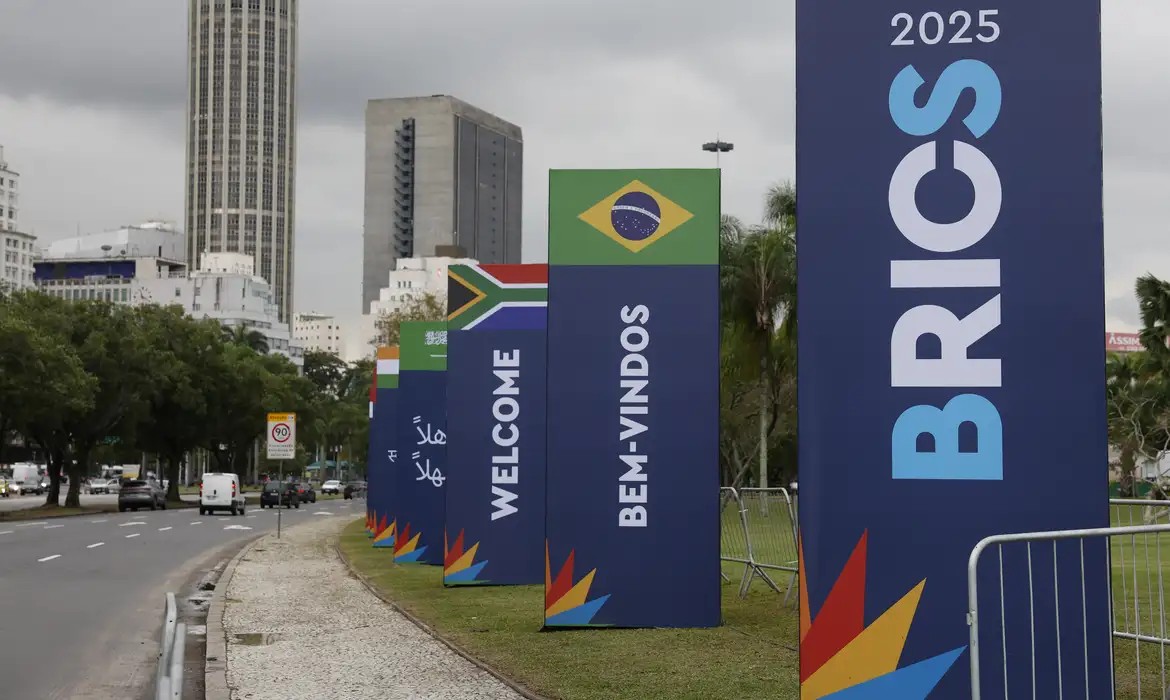
Dear Editor, in July, Brazil hosted the 17th BRICS summit on the theme “Strengthening Global South Cooperation for More Inclusive and Sustainable Governance”, and if by any chance you followed main stream media especially from Western outlets the emphasis was put on the absence of the Chinese President Xi Jinping and Russia’s Vladimir Putin. The West pushed this narrative to water down the 17 years of this summit. The BRICS is a group formed by eleven countries: Brasil, Russia, India, China, South Africa, Saudi Arabia, Egypt, United Arab Emirates, Ethiopia, Indonesia, and Iran. It serves as a political and diplomatic coordination forum for countries from the Global South and for coordination in the most diverse areas.

After the summit ended the former President of Russia Dmitry Medvedev said “BRICS is gaining authority. Trump announced that an additional 10% tariff would be imposed on any country that supports BRICS policy. So, we’re doing everything right!”. There was a myriad of development in Rio de Janeiro that are very important to the development of the global South and many based on the South-South framework. For starters on top of the already 11 member states at the moment going by the Kazan declaration  the Republic of Belarus, the Plurinational State of Bolivia, the Republic of Kazakhstan, the Republic of Cuba, the Federal Republic of Nigeria, Malaysia, the Kingdom of Thailand, the Socialist Republic of Vietnam, the Republic of Uganda, and the Republic of Uzbekistan attended as BRICS partner countries. Which is a stage to attaining membership status.

Uganda’s delegation was led by the Vice President H.E Maj. (Rtd) Jessica Rose Epel Alupo. The only lady to lead a delegation to the summit from a sovereign country in attendance.

Since BRICS prides itself in political and diplomatic coordination, western media didn’t report about the strongest of emphasis put on multilateral reforms especially with actions that amplify the theme of the summit, for example when it comes to making sure Africa, the Caribbean and South America take a more central role in organizations like the World Bank, the World Trade organization (WTO) and the United Nations Security Council (UNSC). The BRICS recognize the legitimate aspirations of African countries, as reflected in the Ezulwini Consensus and Sirte Declaration that advocate for Africa to have two Permanent seats and 3 non permanent seats at the UNSC, they also stressed that the UNSC reforms are to lead to the amplified voice of the Global South. Recalling the 2022 Beijing and 2023 Johannesburg-II Leaders’ Declarations, China and Russia, as permanent members of the UNSC, reiterated their support to the aspirations of Brazil and India to play a greater role in the UN, including its Security Council.

On the issue of poverty and inequality the BRICS put forward the reform of the world Bank and the IMF so that the Bretton Woods system can address the most critical issues of the global South in a just and with more meaningful representation. The BRICS expressed support for the 2025 World Bank shareholding review that is co-chaired by Brazil that is aimed at enhancing legitimacy of the world bank group so that it’s in a better place to really take on modern challenges like creating jobs for a youthful population and dealing with the climate crisis.

Reforming the WTO was very central to the proceeding especially at a time when commercial diplomacy through Tarrif hikes and other trade restrictions is taking place. BRICS is also advocating for the admission of Iran and Ethiopian into WTO. BRICS are also not going to support sanctions that violate international law, a huge push back to the West’s misuse of the concept.

The BRICS forum reappointed Dilma Rousseff to the presidency of New Development Bank (NDB) an institution that is continuing to grow especially with the capacity to raise money that is used to facilitate projects in the global South. To ensure financial independence and resilience a number of measures amongst BRICS members and partners were put in place for example the BRICS New Investment Platform, the BRICS Interbank Cooperation Mechanism, the Rapid Information Security Channel, and the Contingent Reserve Arrangement that is specifically for use of local currencies while sidelining the US dollar. The measures also facilitate Cross border payments, encourage funding of projects through fast and cheap payments.

Later this year Brazil will host COP30, and climate was very key to issues discussed at the 17th BRICS summit, the forum agreed to approach the climate change issue through multilateralism for example by upholding the Paris agreement and putting in place a BRICS climate leadership agenda dedicated to the climate crisis the world faces. It was agreed that each country should play it’s part and honor it’s commitment to climate financing and that there should be local solutions that don’t encourage protectionism in the pretext to combating climate change.

Peace and security was also top of the agenda, for starters there was concern for ongoing conflict around the world, and discouragement for increased military spending that is becoming the trend world over.  The BRICS jointly condemned the USA’s military actions on Iran that were against the UN Charter. On the Ukraine situation there was acknowledgement of the different national positions and a peaceful way forward was advocated for, and appreciation of mediation efforts like the Africa initiative.

On the Israel-Palestine question the BRICS strongly condemned Israel’s actions in Gaza for example the blocking of entry of humanitarian aid and called for an unconditional Ceasefire and the release of hostage on both sides and expressed support for a two state solution.

BRICS was very conscious on human rights, women’s empowerment, the summit committed to advanced collaborative endeavors like the BRICS Network of Universities. Encouraged celebration of cultural heritage and the return of cultural items taken from the global South. There was a very intentional pronouncement on the question of AI and technological advancements.

BRICS is growing, evolving and expanding as it proves its ready to take part in shaping a multipolar world that is inclusive and beneficial for especially the global South.

The writer is a research fellow at the Development Watch Centre.

Zero Tariffs: How China Quietly Rewriting Africa’s Trade Future

At a time when trade wars are raging across the world, something remarkable happened. China opened up its market to Africa fully, as it had promised during FOCAC 9 in September 2024. This write-up will have characteristics of great power contestation concerning the African continent, but it’s not a blind hip of praise for Beijing. It’s a fact that China has not in the past treated Africa with an imperial hand, unlike its counterparts in the West, especially Washington, that only deals with Africa on vertical level.

Present Trump 2.o has decided commercial diplomacy will shape his foreign policy, and Tariffs are at the forefront of his arsenal as the United States deals with the rest of the world especially Africa. Even when Washington established the famous African Growth and Opportunity Act (AGOA) in 2000 to give African economies duty free access, at the end of the day countries that didn’t obey US orders were kicked out. The orders are normally political conditions such as human rights records that are hypocritical, after all they set up their country after genocides against native Americans.

China’s policy to grant African countries duty free access was not an overnight decision, it has been decades in the making, based on pragmatic dialogue between the two sides. It all started back in the Forum on China Africa Cooperation (FOCAC) Ministerial conference in Addis Ababa in the December of 2003 when zero Tariff were introduced on selected African exports to China from 30 countries, and by 2018 the number increased to 33.

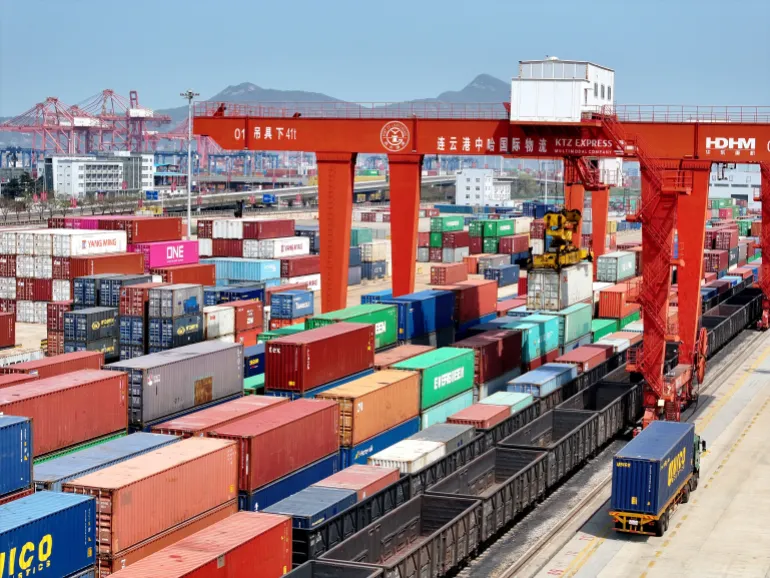
In September of 2024 the 33 countries were formally granted zero tariff treatment to all their experts to China beyond the selected goods from the past, and this took effect in the following December. Through further dialogues most notably the most recent FOCAC followup ministerial meeting held in Changsha in June of 2025, it was announced that all goods from the 33 African countries, and an additional 20 that have diplomatic relations with Beijing would be eligible for 100% duty free access to the world’s second largest economy.

At the moment all African countries except Eswatini that recognizes Taiwan as a country, have a duty free access to the Chinese market. Eswatini’s diplomatic stance does not make sense because even the United States doesn’t recognize Taiwan in that capacity. As Africa was still figuring out the African Continental Free Trade Area (AfCFTA) nothing is going to boost the continent’s main trade vehicle like the Chinese gesture for trade and corporation.

Today China has the second largest economy on the planet with a population of about 1.4 billion people, it has a middle class of over 400 million people, this middle class is still growing and it has the characteristics of other middle classes world over, it desires high quality products of all sorts. This opens several opportunities for the African continent, for example through AfCFTA, to meet Chinese demand for beauty products by African start ups in that sector across the continent will require collaboration, and coordinated efforts to make it into the Chinese market for starters. It’s going to take enhanced regional supply chains that will require regional hubs to facilitate the logistics before they hit the ports to head out for China.

For the youth on the African continent to make into sectors like fashion on the Chinese market, they have to scale up production jointly across the continent, improve economies of scale and export competitiveness are some of the areas that African women making designer clothes that meet the Chinese standards will have to take on from time to time to survive. Automatically to meet the Chinese demand African governments have to make sure there are policies in place to foster intra-Africa trade as industrial diversification will be vital.

On July 15th 2025 as Trump was proposing to impose 10%+ Tariffs on the global South, Beijing gave every African a chance to experience this remarkable natural trade evolution between China Africa Corporation, it’s not imperialistic, it’s coherent and inclusive. The question now, is how does each African from an individual level especially the educated youth benefit from having access to 400 million people with enough disposable income and consuming everything at the moment from goods like coffee, and shea butter, to services like art and music? Most African governments know exactly what they will be exporting to China, but it’s important that the individuals also position themselves to benefit from the duty free access.

To get an African product to the Chinese market there must be agents involved, its not a usual opportunity for Africa to be at the up stream of a supply chain as goods get exported to China. To meet the quality standard, more jobs will be created in agriculture, at rural industrial hubs, and in mining. Even in fashion their will be some form of machinery operations. To facilitate logistics, transport is an endless expanse. The best informed will take up the space of export consultancy. To penetrate the Chinese market, online platforms and E commerce are a must.

A few policies at state level must be put in place across the African continent under the watch of the African Union and it’s 2063 agenda the backbone of the AfCFTA, but also individuals like you and me must be ready to take up the opportunities that will be present to benefit from Africa’s zero Tariff access to the world’s largest population.

The author is a research fellow at the Centre for BRICS Studies, Uganda.