On Uganda’s Position in an Expanding BRICS

By Musiime George

The 2026 BRICS Summit has been the second for Uganda since  its formal admission in 2025, as a partner state into one of the world’s most consequential and, the fastest expanding coalition of emerging economies. Being the first East African nation [to reach this milestone] Uganda needs to view its participation in an expanding BRICS, not as a diplomatic achievement in itself, but as a strategic development opportunity. Kampala’s, main focus should be on converting this position within BRICS into greater diplomatic leverage, investments opportunities, alternative sources of development financing while positioning itself as the region’s gateway into the broader BRICS economy. A strategy that combines such objectives will be key in turning the unique diplomatic window into opportunities that reinforce national development goals articulated in Vision 2040.

Whereas the current status under the BRICS framework doesn’t grant Uganda voting rights, even more important than setting the country on a path to eventual membership is that, this position gives it diplomatic opportunities with great potential of becoming transformative. Going into future summits therefore, the key question should become what more can be achieved with this access even before full membership comes into the picture.

Being a group with nearly half the world’s population, and 40% share of global GDP, to Uganda; BRICS offers a huge consumer market, major source of capital, alternative sources development financing, and the added benefit of major technological capabilities; this while also building a wide diplomatic network. All these collated, widen the spectrum of benefits and prospects for national transformation among which is breaking overreliance on a single dominant partner; the West  —which also is a strategic strangle-hold on national growth prospects. However, this isn’t to buttress the belief that all the above benefits will automatically materialize with flying in the BRICS orbit. By contrast, their attainment  linked to a combination of painstaking strategy and diligent execution —the inroad to turning inclusion into benefits, and opportunity into results.

In the last 20 years, BRICS has grown both in geographical reach, economic weight and, continues on this path. With a membership of eleven emerging economies, and dozens of other nations awaiting admission, the trend signals both growing diplomatic as well as economic influence; —what many small nations in the global south could leverage in their efforts to transform into modern economies. Moreover, as BRICS’ global importance in agenda setting grows, it grows along with Uganda’s diplomatic role as it contributing to norm setting within the platform. Integration into high-level engagements with in the group also implies a growing diplomatic footprint that will in turn increase Uganda’s influence and expand its role in regional, continental, and global south diplomacy.

Turning diplomatic engagement to practical economic and trade cooperation. Since joining BRICS, Uganda has experienced increased high-level diplomatic engagement within the group but also more member states including accelerating the work and broadening scope of the Uganda-Russia Intergovernmental framework last year just as one case. This has also  culminated into the operationalization of bilateral and multilateral arrangements in trade, science & Technology, and industrial innovation.  But the most immediate outcome with superlative consequence has been access to the New Development Bank (NDB) an alternative channel for development financing —and diversifying of foreign policy beyond traditional Western powers.

Now with access to the NDB, pursuing integration with alternative payment systems such as Russia’s SPFS China’s CIPS will not only play a critical role in diversifying and facilitating trade but it will also go a long way in derisking trade. Held together with ongoing domestic and regional infrastructure development, the two will reduce overreliance on the dollar and expand trade opportunities serving as a strong engine for growth. Nevertheless, this, pursued exclusive of agricultural modernization, technology, skills and knowledge transfer may not be as consequential. Whereas the latter establishes connectivity and grows national output of tradable goods, the former stands as a key factor in derisking trade by cushioning growth aspirations from an increasingly risky geo-economic environment.

It’s also my strong conviction that with access to the NDB, Uganda gained access to an alternative source of financing —which it must make use of especially as it prioritizes large scale infrastructure projects. As the region’s sole BRICS partner, it should aim to establish itself as a regional logistical and manufacturing hub for the BRICS economy. Here the pitfall that must be avoided is becoming a market for BRICS goods. Instead, the status within the alliance ought to be viewed in terms of the market potential, relationship needing leveraging for capital, technology and Industrial machinery to boost production and exports.

Uganda’s strong positions in minerals and other natural resources, agriculture and tourism need to be backed by vibrant industrial value addition, plus a strong service sector for better outcomes. In collaboration with regional and BRICS partners, Uganda has the opportunity of become a regional economic corridor for this market. The NDB, here must be leveraged as an alternative to slow-moving, red-tape riddled western financing if the country is to undertake large-scale infrastructure project towards this objective. Indeed, this should be treated as critical in circumventing the limitations posed by a modest market of 48 million.

Uganda’s message at the summit was vivid; emphasizing strategic autonomy and  global south solidarity. within this very framework however, Uganda needs to focus more on diversification than wholesale geopolitical alignment and outcomes not symbolism. The structure of BRICS is free from some key flaws common with western dominated multilateral platforms thus working within the latter, Uganda is capable of achieving more as long as its action with in the platform is guided by a clear strategy

By Musiime George
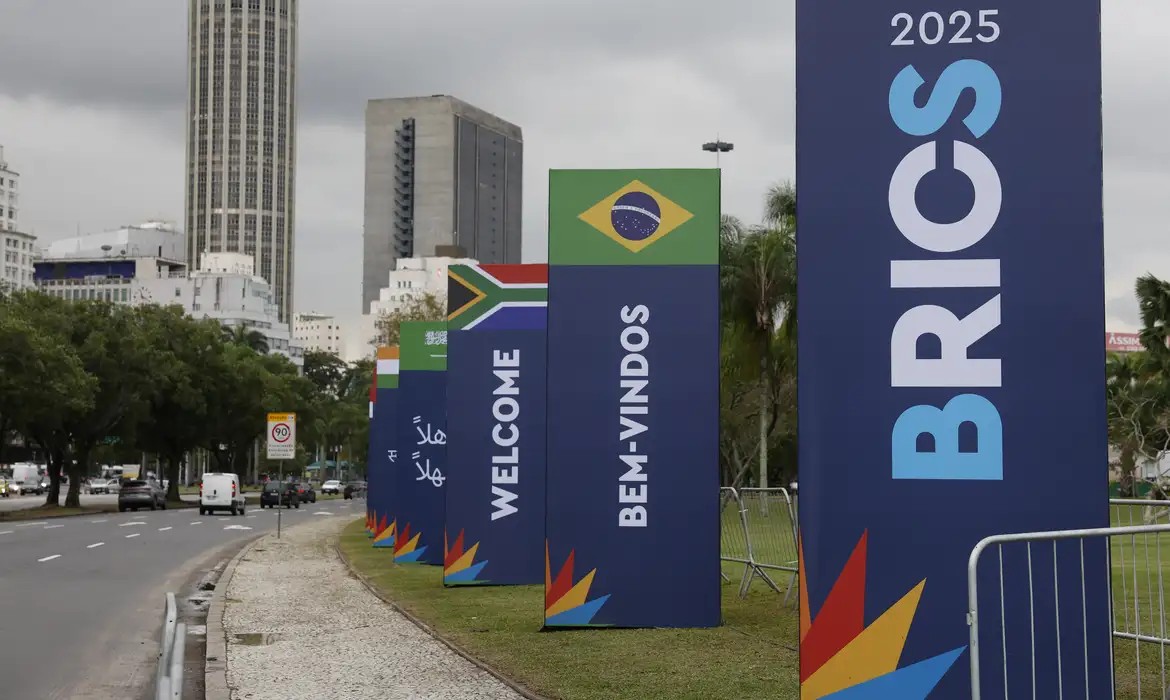
Rio 2025 BRICS Paves Way for Global South Leadership

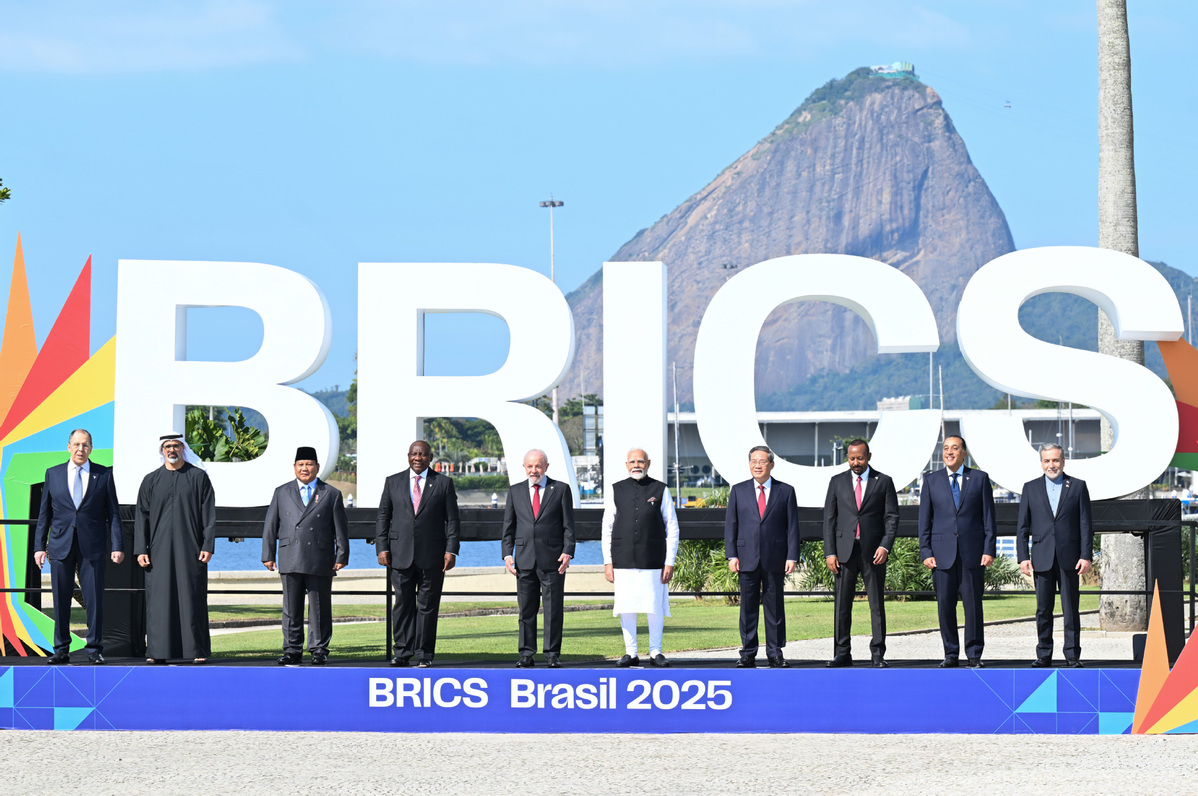
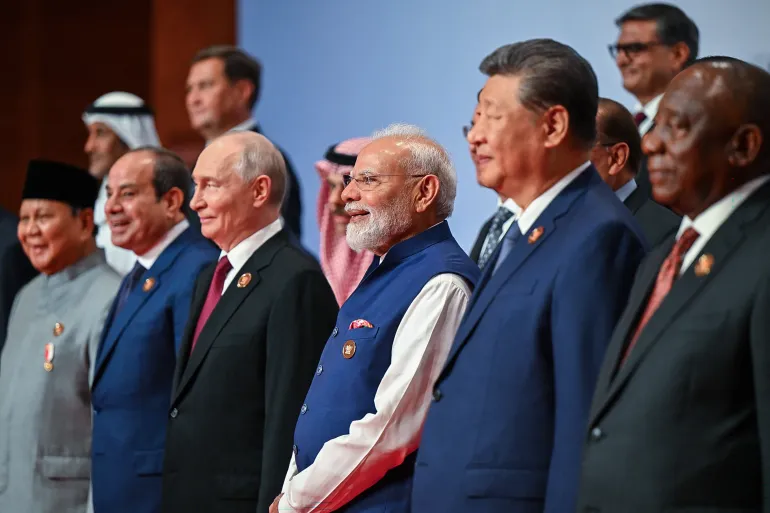
Dear Editor, in July, Brazil hosted the 17th BRICS summit on the theme “Strengthening Global South Cooperation for More Inclusive and Sustainable Governance”, and if by any chance you followed main stream media especially from Western outlets the emphasis was put on the absence of the Chinese President Xi Jinping and Russia’s Vladimir Putin. The West pushed this narrative to water down the 17 years of this summit. The BRICS is a group formed by eleven countries: Brasil, Russia, India, China, South Africa, Saudi Arabia, Egypt, United Arab Emirates, Ethiopia, Indonesia, and Iran. It serves as a political and diplomatic coordination forum for countries from the Global South and for coordination in the most diverse areas.

After the summit ended the former President of Russia Dmitry Medvedev said “BRICS is gaining authority. Trump announced that an additional 10% tariff would be imposed on any country that supports BRICS policy. So, we’re doing everything right!”. There was a myriad of development in Rio de Janeiro that are very important to the development of the global South and many based on the South-South framework. For starters on top of the already 11 member states at the moment going by the Kazan declaration  the Republic of Belarus, the Plurinational State of Bolivia, the Republic of Kazakhstan, the Republic of Cuba, the Federal Republic of Nigeria, Malaysia, the Kingdom of Thailand, the Socialist Republic of Vietnam, the Republic of Uganda, and the Republic of Uzbekistan attended as BRICS partner countries. Which is a stage to attaining membership status.

Uganda’s delegation was led by the Vice President H.E Maj. (Rtd) Jessica Rose Epel Alupo. The only lady to lead a delegation to the summit from a sovereign country in attendance.

Since BRICS prides itself in political and diplomatic coordination, western media didn’t report about the strongest of emphasis put on multilateral reforms especially with actions that amplify the theme of the summit, for example when it comes to making sure Africa, the Caribbean and South America take a more central role in organizations like the World Bank, the World Trade organization (WTO) and the United Nations Security Council (UNSC). The BRICS recognize the legitimate aspirations of African countries, as reflected in the Ezulwini Consensus and Sirte Declaration that advocate for Africa to have two Permanent seats and 3 non permanent seats at the UNSC, they also stressed that the UNSC reforms are to lead to the amplified voice of the Global South. Recalling the 2022 Beijing and 2023 Johannesburg-II Leaders’ Declarations, China and Russia, as permanent members of the UNSC, reiterated their support to the aspirations of Brazil and India to play a greater role in the UN, including its Security Council.

On the issue of poverty and inequality the BRICS put forward the reform of the world Bank and the IMF so that the Bretton Woods system can address the most critical issues of the global South in a just and with more meaningful representation. The BRICS expressed support for the 2025 World Bank shareholding review that is co-chaired by Brazil that is aimed at enhancing legitimacy of the world bank group so that it’s in a better place to really take on modern challenges like creating jobs for a youthful population and dealing with the climate crisis.

Reforming the WTO was very central to the proceeding especially at a time when commercial diplomacy through Tarrif hikes and other trade restrictions is taking place. BRICS is also advocating for the admission of Iran and Ethiopian into WTO. BRICS are also not going to support sanctions that violate international law, a huge push back to the West’s misuse of the concept.

The BRICS forum reappointed Dilma Rousseff to the presidency of New Development Bank (NDB) an institution that is continuing to grow especially with the capacity to raise money that is used to facilitate projects in the global South. To ensure financial independence and resilience a number of measures amongst BRICS members and partners were put in place for example the BRICS New Investment Platform, the BRICS Interbank Cooperation Mechanism, the Rapid Information Security Channel, and the Contingent Reserve Arrangement that is specifically for use of local currencies while sidelining the US dollar. The measures also facilitate Cross border payments, encourage funding of projects through fast and cheap payments.

Later this year Brazil will host COP30, and climate was very key to issues discussed at the 17th BRICS summit, the forum agreed to approach the climate change issue through multilateralism for example by upholding the Paris agreement and putting in place a BRICS climate leadership agenda dedicated to the climate crisis the world faces. It was agreed that each country should play it’s part and honor it’s commitment to climate financing and that there should be local solutions that don’t encourage protectionism in the pretext to combating climate change.

Peace and security was also top of the agenda, for starters there was concern for ongoing conflict around the world, and discouragement for increased military spending that is becoming the trend world over.  The BRICS jointly condemned the USA’s military actions on Iran that were against the UN Charter. On the Ukraine situation there was acknowledgement of the different national positions and a peaceful way forward was advocated for, and appreciation of mediation efforts like the Africa initiative.

On the Israel-Palestine question the BRICS strongly condemned Israel’s actions in Gaza for example the blocking of entry of humanitarian aid and called for an unconditional Ceasefire and the release of hostage on both sides and expressed support for a two state solution.

BRICS was very conscious on human rights, women’s empowerment, the summit committed to advanced collaborative endeavors like the BRICS Network of Universities. Encouraged celebration of cultural heritage and the return of cultural items taken from the global South. There was a very intentional pronouncement on the question of AI and technological advancements.

BRICS is growing, evolving and expanding as it proves its ready to take part in shaping a multipolar world that is inclusive and beneficial for especially the global South.

The writer is a research fellow at the Development Watch Centre.

Uganda’s BRICS Partnership: A Role in Reshaping the Global Order

By Shemei Ndawula

The BRICS summit in Rio was the death knell to the old world order. In a seismic shift of global power diplomacy, 11 countries; with Uganda being the sole representative from East Africa, were formally admitted into the alliance. This bold move is an undeniable vote of confidence into the promise of the alliance to scale inclusive growth and sustainable governance.

The parallel remarks by US President Trump labeling BRICS-aligned nations as “enemies” and threatening 10% tariffs on their exports, underscore the urgency of the BRICS vision of a multipolar world of open markets and mutual prosperity. President Trumps remarks ought to call for a diplomatic response, not retreat. Uganda has the enviable opportunity to leverage its BRICS role as a spur for  economic resilience and regional leadership, ensuring Africa’s voice plays a role in shaping the global agenda within the BRICS framework.

The BRICS alliance was formed on the premise of a single question; why? Why should a single nation’s currency (not backed by anything) be the reserve currency of the entire world? Why must the global power structure be perpetually tilted to favor a select few world powers who lord systems of governance and economic monopolies around the globe? Why must we maintain a global world order that cripples our economies, inflates our trade deficits, and keeps us in a perpetual cycle of non-developmental administrative restructures blind to our cultural diversity? Why must our survival be financed by non performative debts to maintain extractive economies?

BRICS offers a numerical answer of 4.5 billion people. Our partnership with the BRICS offers the Ugandan farmer(seven in 10 Ugandans are engaged in agriculture) an expanded market of 4.5 billion people to sell our coffee and to as well as a myriad of other farm products, the Ugandan entrepreneur joins an expanded economy of 27.35 trillion dollars to explore and for the government a NewDevelopment Bank that will finance not a hamster wheel of neo-colonial extraction but real infrastructural development. Trading in local currencies like the Chinese yuan and South African rand can stabilize incomes for Ugandan investors , freeing them from the evident volatility of dollar dependence.

President Trump’s tariff threats, aimed at BRICS members and partners, challenge our economic ties with the U.S, including vital health programs still reeling from the impact of the early aid cuts by the current administration. This is precisely why Uganda’s BRICS partnership matters both nationally and regionally. It offers a pathway to diversify our alliances, reducing reliance on any single global power and in the growing multipolar world. As a nationalist with an unwavering “America First” principle, President Trump ought to be the strongest proponent of BRICS which is hinged on cultivating independent yet inclusive frameworks for transnational cooperation with core principles of mutual respect, understanding, sovereign equality, solidarity, democracy inclusiveness, collaboration and consensus.

To fully embrace this moment, Uganda must act with strategic foresight. A dedicated BRICS envoy would ensure our priorities—trade equity, climate finance, and global governance reform—are central in the partnership’s high level discussions. As East Africa’s sole BRICS partner, Uganda’s uniquely suited to re-echo the voices of Kenya, Tanzania, and Rwanda and the broader African Union, advocating for a permanent African UN Security Council seat and funding for sustainable energy and knowledge transfer. A national BRICS strategy, shaped by academics, businesses, and communities, would unify our efforts, positioning Uganda as a regional leader. Our history of peacekeeping in Somalia and South Sudan shapes us as continental leaders who can lead on the global stage, bridging divides with diplomacy.

What BRICS brings to the table is partnership based on mutual respect and the highlevel discussion in Brazil was a stark contrast to the Whitehouse Luncheon organised for African heads of states that coincided with the Summit where President Trump is quoted telling the African presidents to “go a bit quicker than this because we have a whole schedule. If I could just have your name and country, that would be great. ”

BRICS is not a rejection of the West but a complement to it, offering Uganda flexibility to engage multiple partners on diversified fronts. The African Continental Free Trade Area, set to transform regional trade, can work alongside BRICS to strengthen our markets As well as other BRICS member implemented projects like the Belt and Roads Initiative by China which has already spurred significant progress in Africa. As a BRICS partner, Uganda must speak with clarity, advocating for a world order where power is shared, not hoarded. Our BRICS partnership is a call to lead, ensuring East Africa’s aspirations resonate globally.

Shemei Ndawula is a Senior Research Fellow at the Development Watch Center.