On Uganda’s Position in an Expanding BRICS

By Musiime George

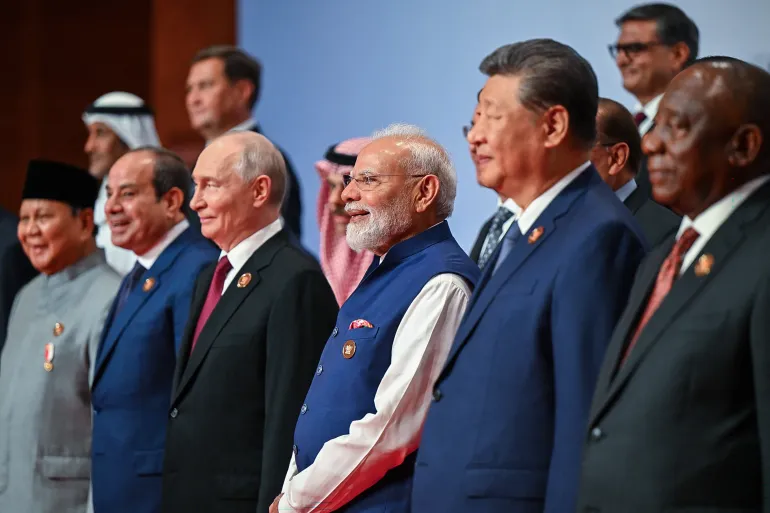
The 2026 BRICS Summit has been the second for Uganda since  its formal admission in 2025, as a partner state into one of the world’s most consequential and, the fastest expanding coalition of emerging economies. Being the first East African nation [to reach this milestone] Uganda needs to view its participation in an expanding BRICS, not as a diplomatic achievement in itself, but as a strategic development opportunity. Kampala’s, main focus should be on converting this position within BRICS into greater diplomatic leverage, investments opportunities, alternative sources of development financing while positioning itself as the region’s gateway into the broader BRICS economy. A strategy that combines such objectives will be key in turning the unique diplomatic window into opportunities that reinforce national development goals articulated in Vision 2040.

Whereas the current status under the BRICS framework doesn’t grant Uganda voting rights, even more important than setting the country on a path to eventual membership is that, this position gives it diplomatic opportunities with great potential of becoming transformative. Going into future summits therefore, the key question should become what more can be achieved with this access even before full membership comes into the picture.

Being a group with nearly half the world’s population, and 40% share of global GDP, to Uganda; BRICS offers a huge consumer market, major source of capital, alternative sources development financing, and the added benefit of major technological capabilities; this while also building a wide diplomatic network. All these collated, widen the spectrum of benefits and prospects for national transformation among which is breaking overreliance on a single dominant partner; the West  —which also is a strategic strangle-hold on national growth prospects. However, this isn’t to buttress the belief that all the above benefits will automatically materialize with flying in the BRICS orbit. By contrast, their attainment  linked to a combination of painstaking strategy and diligent execution —the inroad to turning inclusion into benefits, and opportunity into results.

In the last 20 years, BRICS has grown both in geographical reach, economic weight and, continues on this path. With a membership of eleven emerging economies, and dozens of other nations awaiting admission, the trend signals both growing diplomatic as well as economic influence; —what many small nations in the global south could leverage in their efforts to transform into modern economies. Moreover, as BRICS’ global importance in agenda setting grows, it grows along with Uganda’s diplomatic role as it contributing to norm setting within the platform. Integration into high-level engagements with in the group also implies a growing diplomatic footprint that will in turn increase Uganda’s influence and expand its role in regional, continental, and global south diplomacy.

Turning diplomatic engagement to practical economic and trade cooperation. Since joining BRICS, Uganda has experienced increased high-level diplomatic engagement within the group but also more member states including accelerating the work and broadening scope of the Uganda-Russia Intergovernmental framework last year just as one case. This has also  culminated into the operationalization of bilateral and multilateral arrangements in trade, science & Technology, and industrial innovation.  But the most immediate outcome with superlative consequence has been access to the New Development Bank (NDB) an alternative channel for development financing —and diversifying of foreign policy beyond traditional Western powers.

Now with access to the NDB, pursuing integration with alternative payment systems such as Russia’s SPFS China’s CIPS will not only play a critical role in diversifying and facilitating trade but it will also go a long way in derisking trade. Held together with ongoing domestic and regional infrastructure development, the two will reduce overreliance on the dollar and expand trade opportunities serving as a strong engine for growth. Nevertheless, this, pursued exclusive of agricultural modernization, technology, skills and knowledge transfer may not be as consequential. Whereas the latter establishes connectivity and grows national output of tradable goods, the former stands as a key factor in derisking trade by cushioning growth aspirations from an increasingly risky geo-economic environment.

It’s also my strong conviction that with access to the NDB, Uganda gained access to an alternative source of financing —which it must make use of especially as it prioritizes large scale infrastructure projects. As the region’s sole BRICS partner, it should aim to establish itself as a regional logistical and manufacturing hub for the BRICS economy. Here the pitfall that must be avoided is becoming a market for BRICS goods. Instead, the status within the alliance ought to be viewed in terms of the market potential, relationship needing leveraging for capital, technology and Industrial machinery to boost production and exports.

Uganda’s strong positions in minerals and other natural resources, agriculture and tourism need to be backed by vibrant industrial value addition, plus a strong service sector for better outcomes. In collaboration with regional and BRICS partners, Uganda has the opportunity of become a regional economic corridor for this market. The NDB, here must be leveraged as an alternative to slow-moving, red-tape riddled western financing if the country is to undertake large-scale infrastructure project towards this objective. Indeed, this should be treated as critical in circumventing the limitations posed by a modest market of 48 million.

Uganda’s message at the summit was vivid; emphasizing strategic autonomy and  global south solidarity. within this very framework however, Uganda needs to focus more on diversification than wholesale geopolitical alignment and outcomes not symbolism. The structure of BRICS is free from some key flaws common with western dominated multilateral platforms thus working within the latter, Uganda is capable of achieving more as long as its action with in the platform is guided by a clear strategy

By Musiime George
How the 2026 New Delhi BRICS Summit Accelerates Global South Sovereignty

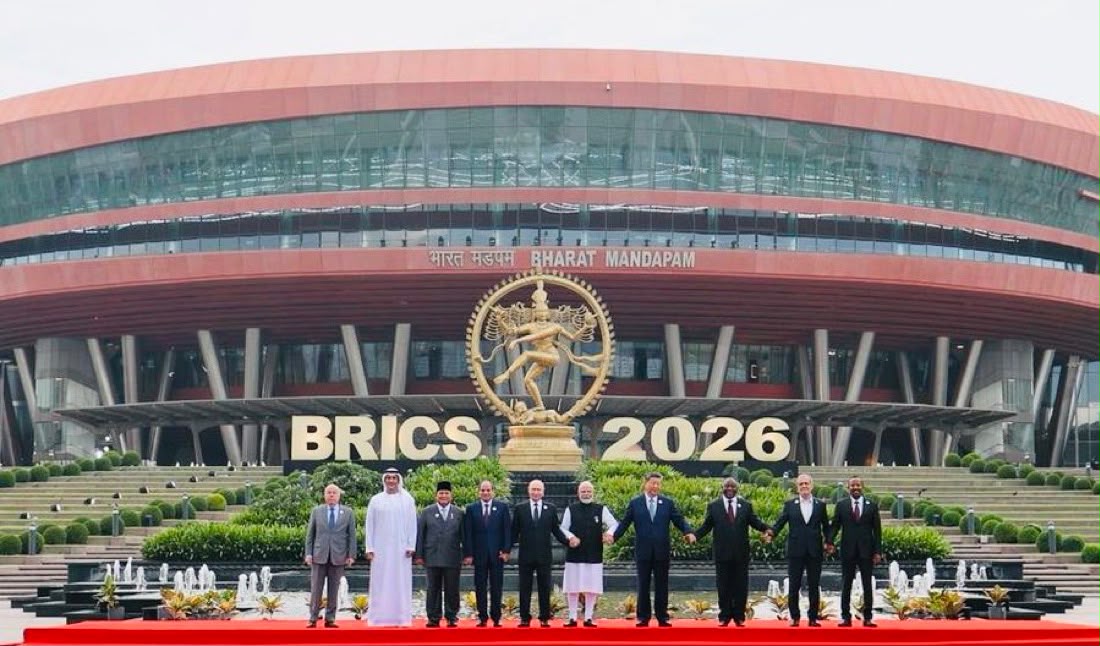
The 18th BRICS Summit, held under the expanded “BRICS Plus” format, has just concluded, and Uganda was represented by Vice President Jessica Alupo at the pivotal gathering. The bloc now spans four continents, well beyond the original four-country dialogue format, and includes global oil states like Iran, Saudi Arabia, Russia, and the United Arab Emirates, alongside African economies and South Asian partners. The theme for the 2026 BRICS Summit was building for resilience, innovation, cooperation, and sustainability, and going by the whole process leading up to the September 12–13 event, it lived up to the core of that theme.

Ahead of the much more publicized main event, which saw heads of state from Iran, Russia, South Africa, Ethiopia, and China, among others, join their Indian counterpart in New Delhi, there had been about 400 smaller, more focused meetings. Foreign ministers from the member states and partner states met in India twice to draw up the agenda for the final summit. There was also a youth ministers’ meeting in August, and the sports ministers met as well, with India possibly hosting the first-ever BRICS Games in October. There was a meeting of security ministers, a BRICS business forum, and separate events on health and the environment. In total, India organised about 400 working groups and ministerial meetings that climaxed in the heads of state summit and the 2026 New Delhi BRICS Declaration.

For the Global South, and Africa in particular, the 20th anniversary of BRICS should be the moment to associate more closely with the bloc. Over the past two decades, it has become not just an economic dialogue but the primary engine and collective voice for the Global South, and an opportunity for diplomacy, unlike other formations where countries are expelled. At BRICS, countries like Iran and the UAE got a chance for a sideline meeting even after failing to agree during previous foreign ministers’ meetings.

The fact that the President of Burundi and current Chairman of the African Union, H.E. Evariste Ndayishimiye, attended to represent the interests of the AU was remarkable, signalling that African interests align with the expanded BRICS agenda, for example, on food security and the grain exchange initiative put forward by the Prime Minister of Ethiopia during the leaders’ meeting. BRICS is that place where emerging economies like Uganda are not passive recipients of global decision-making but active architects of the unfolding multipolar international order.

BRICS does not oppose the current world order but, from time to time, advocates for reform of global governance and multilateral institutions. The most significant guest on that note at the 2026 BRICS Summit must have been the Director-General of the World Trade Organisation (WTO), Dr. Ngozi Okonjo-Iweala, who held a number of meetings with various heads of state, including one with H.E. Dilma Rousseff, President of the New Development Bank (NDB), which is currently funding about 19 infrastructure projects across Africa valued at about $3 billion. She also met with the President of the Asian Infrastructure Investment Bank, Ms. Zou Jiayi. In her statement after the summit, she underscored the reality of the changing dynamics of global trade and urged BRICS to be more strategic at the WTO and help drive reforms.

Dr. Ngozi Okonjo-Iweala’s admonishments to BRICS apply equally to reform at forums like the UN and the UN Security Council. The 2026 New Delhi BRICS Declaration detailed the call for comprehensive reform of the UN Security Council to amplify developing nations, especially backing Africa’s aspirations through the Ezulwini Consensus and the Sirte Declaration. The summit also stressed expanding African, Asian, and Latin American leadership across UN executive bodies. On further reforms, the 2026 BRICS Summit demanded reform of the Bretton Woods institutions, specifically calling for realigning IMF quota shares under the 17th General Review of Quotas and rebalancing World Bank shareholding to reflect the actual economic weight of emerging markets and developing countries (EMDCs). With Dr. Ngozi of the WTO present, the summit issued a rejection of unilateral coercive sanctions and protectionist measures disguised as climate policies, such as Carbon Border Adjustment Mechanisms (CBAM), and instead advocated for an open, rules-based WTO with a fully restored two-tier dispute settlement mechanism. This came on the back of China’s expansion of zero-tariff treatment to 53 African nations as a concrete step towards inclusive trade in the South-South sphere.

The summit put forward practical measures to ensure the financial sovereignty of individual member and partner states. On local currencies and cross-border trade, there was emphasis on building mechanisms to reduce reliance on third-party currencies, including trade settlements in BRICS local currencies and the work of the BRICS payment task force. On unfair loans from the traditional Bretton Woods institutions, there are plans to expand the NDB as a vital alternative development finance partner for the Global South, with its mandate for local currency financing and infrastructure de-risking. From the agriculture ministers’ meeting, the BRICS Summit adopted the BRICS Grain Exchange and the farmer-centric BRICS AGRAIN network to counter price volatility and protect smallholder farmers while ensuring global food security.

The summit advocated for and pushed African self-determination in conflict resolution by reaffirming the core commitment to “African solutions to African problems” in regional crises such as Sudan and the Eastern Democratic Republic of Congo. On global security and humanitarian principles, the summit further demanded the upholding of ceasefires in Gaza and Southern Lebanon, unhindered humanitarian access, and a viable two-state solution based on the pre-1967 borders for Palestine.

There was a call for equitable climate finance among the BRICS countries, with the summit stressing respect for national just transition pathways and traditional knowledge systems while rejecting the linking of climate agendas to security frameworks.

The 2026 New Delhi BRICS Summit reflects the growing tendency of emerging market countries to strengthen their global sovereignty through joint action, institutional reform, and South-South collaboration. For Africa, especially for member states like Egypt, South Africa, and Ethiopia, alongside partner states like Uganda and Nigeria, BRICS provides a forum to influence international governance, enhance financial and trade autonomy, promote African interests, and advance a more equitable, multipolar international system.